
Research topics
Discover the diversity of research topics investigated in our laboratories.
Research laboratories
Explore the research laboratories directed by our faculty, and learn how to get involved.
Programs, centers, and institutes
Learn more about interdisciplinary research and learning opportunities.
Research groups
Faculty research news

CLAS professor receives nearly $1.5 million in NIH funding to study risk and protective factors for sexual aggression
Tuesday, November 24, 2026
Teresa Treat, professor in the Department of Psychological and Brain Sciences, will examine how alcohol use and other factors contribute to sexually aggressive behavior among college men to inform prevention efforts.

Bengi Baran awarded $3.8 million from the NIH to study sleep and cognitive decline in people with schizophrenia
Monday, November 23, 2026
The five-year study aims to uncover how disrupted sleep affects memory and thinking, potentially paving the way for new treatments that improve quality of life as people with schizophrenia age.

PBS researcher receives $3 million NIH grant to study cocaine-seeking behavior
Monday, November 23, 2026
Researchers in the Department of Psychological and Brain Sciences in the College of Liberal Arts and Sciences (CLAS) will investigate how the brain processes competing motivations to use or avoid cocaine, with the goal of informing future addiction treatments.

PBS researcher finds connection between hope and ovarian cancer biology
Thursday, November 19, 2026
New research led by faculty member Susan Lutgendorf suggests that hope may be linked to differences in the molecular biology of ovarian tumors. While the study does not show that feeling hopeful directly changes cancer cells or improves outcomes, it offers another avenue for understanding how psychological well-being may relate to cancer biology.

Carrie Figdor traces mental features across the tree of life
Thursday, November 12, 2026
Figdor explores how decision-making, memory, and learning apply across species—and what evolution can tell us about the mind.

The evolutionary arc from pigeon brains to machine consciousness
Monday, November 9, 2026
Comparative cognition researcher Edward Wasserman is featured in science magazine Nautilus about learning and the “edge of chaos”.

“Yes, and—”: Dan Junis brings the principles of improv to CLAS and beyond
Tuesday, November 3, 2026
What began as a way to overcome his fear of public speaking now shapes how Dan Junis collaborates with colleagues, supports students, and helps people with obsessive-compulsive disorder practice navigating uncertainty.

How assistant professor Jeffrey Cockburn is using computation to uncover how the brain makes decisions
Tuesday, October 13, 2026
Jeffrey Cockburn combines psychology, neuroscience, and computer science to explore how the brain makes predictions and improve mental health care.

Psychology student creates organization working to end period poverty
Tuesday, October 13, 2026
She Shelf, a newly formed student organization at the University of Iowa, is working to end period poverty in the Iowa City community.
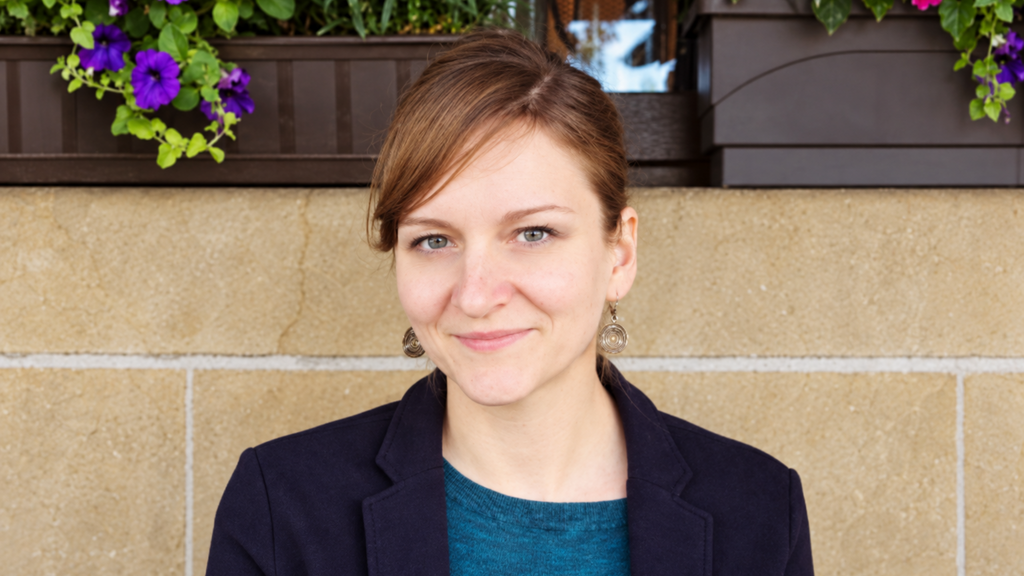
Dorit Kliemann researches the remarkable social brain
Wednesday, September 30, 2026
This Department of Psychological and Brain Sciences faculty member studies how the brain helps people understand one another—and how it adapts when its networks change.